
What is Selaginella:
SYSTEMATIC POSITION
Division: Pteridophyta
Class: Ligulopsida
Order: Selaginellales
Family: Selaginellaceae
Genus: Selaginella
Introduction
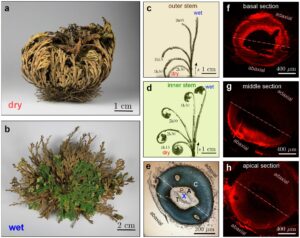
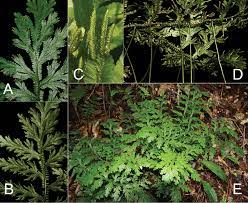
The genus Selaginella commonly called ‘small club moss’ includes about 700 species out of which 70 have been reported from India. They are distributed mainly in Tropical and subtropical forests of the world in shady and damp places. A few species in extreme xeric conditions.Selaginella species are creeping or ascendant plants with simple, scale-like leaves (microphylls) on branching stems from which roots also arise. The stems are aerial, horizontally creeping on the substratum (as in Selaginella kraussiana), sub-erect (Selaginella trachyphylla) or erect (as in Selaginella erythropus).
Habitat:Selaginella species very considerably in size ,nature and form of plant body.Most of them are perennial herbs; a few are annuals. Plant size vary from few to several metres. Majority are dorsiventral and prostrate, a few are radial and erect. Some species are climbers while others grow on trunks as epiphytes.
EXTERNAL FEATURES
1. Stem: Stem varies greatly indifferent types of species. It may be herbaceous, radial and erect (S.selaginoides), prostrate and dorsiventral (S.chrysorrhizos), sub erect scandent (S.Kraussiana) or pendent. It is mostly branched (rarely unbranched) and branches are dichotomous but later on become monopodial.Stem is usually green, smooth and glabrous.
2. Leaves: The leaves are sessile, microphyllous, linear ovate or lanceolate in shape, each with a distinct unbranched midrib. They are delicate green with entire or serrate margin and acute apex. Except in xerophytic species the leaves are rough and thick. The leaves are ligutate a characteristic feature of ligulopsida. Depending upon the species leaves may be isophyllous or anisophyllous (dimorphic). In anisophyllous spices, leaves are arranged in 4 longitudinal rows. 2 rows of larger ventral leaves and 2 rows of smaller dossal leaves attached laterally on the dorsiventral stem. The larger leaves form pair with smaller leaves in opposite and decussate manner.
3. Ligule: It is small tongue, wedge or lanceolate shaped outgrowth present at the base of each young leaf on its adaxial side. At maturity it withers away. Ligule protects leaf primordium and young sporangium during development.
4. Root: Roots are adventitious and originate from the tips of rhizophores, from swollen bases of hypocotylor directly from the stem. Roots arise endogenously and branch dichotomously. They do not bear rootcaps or root hairs.
5. Rhizophore: In dorsiventral species of Selaginella a number of long, colorless, leafless, positively geotropic shoot originate from the point of dichotomy of stem. These grow deep into the soil and bear roots at their terminal swollen end. Usually one rhizophore arises but in some cases two rhizophores one dorsal and one ventral may arise but only the ventral one grows down into the soil and bear roots. In climbing species the tips of rhizophores develop pad like thickenings and help in climbing. In radial species the rhizophores are absent.