
What is Pteridophytes?
A pteridophyte is a vascular plant that disperses spores. Because pteridophytes produce neither flowers nor seeds, they are sometimes referred to as “cryptogams”, meaning that their means of reproduction is hidden. Ferns, horsetails, and lycophytes are all pteridophytes.
General characters of Pteridophytes:
- HABITAT
Pteridophytes grow under varied habitats. Most of them are terrestrial plants and thrive well under damp and shady conditions while some flourish well in open exposed dry places or even under xeric conditions e.g. Selaginella, Lepidophylla. A few are aquatic e.g. Marsilea, Azolla, Salvia, while others are epiphytes e.g Lycopodium oregana, Psilotum flaccidum.
- SPOROPHYTE
The main independent plant body is a sporophyte developed from diploid zygote after fertilization of gametes It shows great variations in form, size and structure. Most of the present day pteridophytes are herbaceous except a few woody tree ferns e.g. Cyathea spinulosa, Diksonia.
- MORPHOLOGY
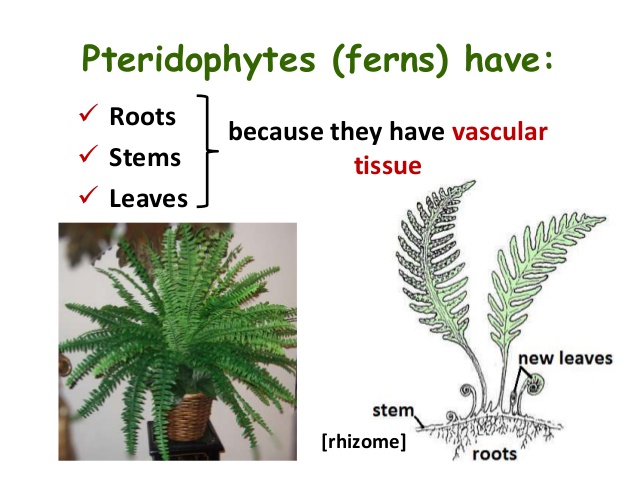
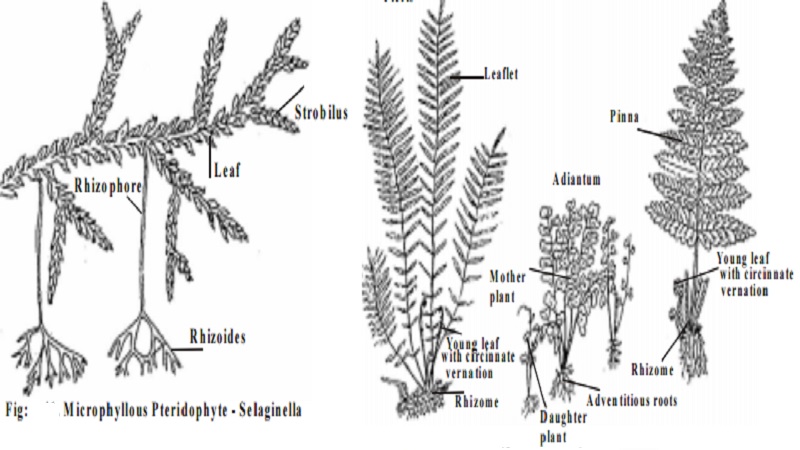
Plants are differentiated into true roots, stem and leaves, however in lower pteridophytes like Psilotales and Psilophytales leaves and roots are absent. Plants exhibit dorsiventral or radial symmetry and branching of stem is dichotomous or monopodial, bearing microphyllous e.g. Lycopodiom, Equisetum or macrophyllous
leaves eg. Pteris, Petridium. Primary root is short lived and is replaced by adventitious roots, which arise
endogenously.
- ANATOMY
(i) All the vegetative parts possess vascular tissue organized in definite groups or stele which ranges from simple protostele e.g. Selaginella, Siphonostele e.g. Marsilea, to dictyostele e.g. ferns to eustele e.g. Equisetum. Xylem mainly consists of tracheids and xylem parenchyma.
(ii) Vessels are absent. However in Selaginella, Marsilea and Equisetum some primitive type of vessels
have been reported. Phloem consists of sieve tube and phloem parenchyma.
(iii) Companian Cells are absent, secondary growth does not occur in most of the pteridophytes, in
Isoetes.
- REPRODUCTION
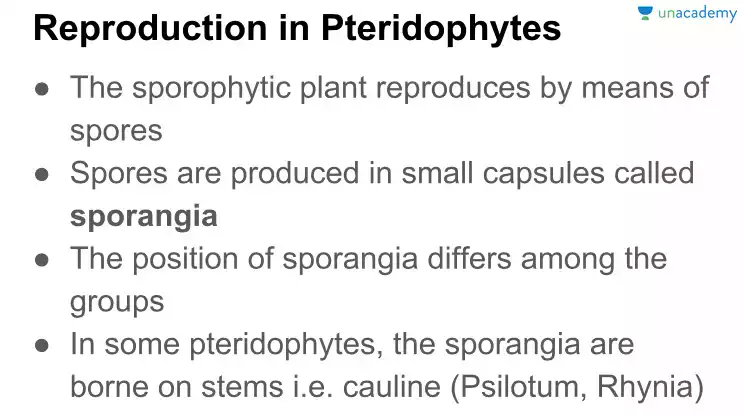
(1) Sporophytic plant body reproduces by producing haploid spores by meiosis inside the sporangia and serve as a means of asexual reproduction.
(i) The plants may be homosporous (e.g. Psilotum, Pteris, Equisetum) or heterosporous (e.g. Selaginella, The development of sporangia may be eusporangiate (e.g. Selaginella, Lycopodium from a group of initial cells) or leptosporangiate (from a single initial cell, eg, Marsilea, Pteris).
(iii) There is a great variation in the distribution of sporangia. Sporangia are either borne on stem (Cauline in origin) or on Leaves.
- GAMETOPHYTE
(i) Spores germinate to produce haploid gametophyte, called prothallus, which is markedly dissimilar from the sporophyte. The homosporous pteridophytes produce bisexual (monoecious) gametophytes (may be protandrous or protogynous) whereas heterosporous ones produce unisexual (dioecious) gametophytes.
(ii) Microspores and megaspores produce male & female gametophytes respectively. The latter may be exosporic (Psilotum, Lycopodium, Pteris), grow on the soil as independent plant or endosporic, grow for the most part inside the spore wall e.g. Marsilea, Selaginella.
(iii) The prothalli from homosporous ferns are either green and simple or branched and aerial structures (e.g Pieris & Pteridium) or they may be subterranean, colorless, tuberous and saprophytic (e.g. Lycopodium).
(iv) The gametophytes are highly reduced in heterosporous sporophytes represented by a few vegetative
cells and sex organs get their nourishment from the reserve food stored in spores.
- SEX ORGANS
(i) The sex organs may be embedded (Lycopodium, Equisetum) or projecting type (Pteris, Pteridium) and resemble the bryophytes in general plan of structure.
(in) Archegonia, the female sex organs are flask shaped differentiated into venter and neck. Venter contains venter canal cell and egg. Neck consists of 2-6 vertical rows of cells and an axial row of 1-14 neck canal cells.
(ii) Each antheridium, the male sex organ consists of single layer of sterile jacket enclosing a large number of androcytes, which metamorphose into flagellate motile antherozoids.
- FERTILIZATION
Sexual reproduction is oogamous and fertilization occurs in presence of water, as it is needed for dehiscence and movement of antherozoids to archegonia.
- SYNGAMY
It results in the formation of diploid zygote, which develops into an embryo within the archegonial venter and is surrounded and nourished by the prothallus tissue in early stages of developments.
- Alternation of Generation in pteridophytes is heterogamous and life cycle is diplohaplontic.
ECONOMIC IMPORTANCE
- Ornamental: Many species of pteridophytes though less in number claims a distinct charm and physiognomy to the landscape e.g. Hanging club mosses, elegant tree forms, epiphytic forms, Horse tails, colored foliage of Selaginella species etc. 2.
- Medicinal: Equisetum species are used as diuretic, and as cooling medicines. Ophioglossum called
adder’s tongue produces antidote for snake. Adiantum is believed to cure blindness.
3. Resurrection plant: The species of Selaginella are xerophytic and are sold as resurrection plants in dry condition which again become green when put in water.
- Mineral indicator: Equisetum arvense indicate the presence of gold in the soil in which they grow, as one ton of this plant can accumulate 4-1/2 ounces of gold in its tissue.
- Polishing material: Lycopodium spores are used to smoothen bowls and globes. Equisetum is also used for polishing woods, pots, floors, utensils etc.
- Paper Industry: Salvinia auriculata can be used in paper industry.
- Oil and fragrance: Aromatic oils secreted from Angiopteris species and Polypodium species are used for perfuming coconut oils. Perfumed soaps are also prepared by adding the extracts of Dryopteris. 8. Flavoring agents: Tannic acid, garlic acid, and traces of essential oils present in Adiantum produce pleasant odors. Rhizome of Polypodium vulgare also contains a steroid saponin, which have sweet taste.
- Fibers: Ferns are used for making hats, mats, cigar cases, fishing traps etc.
- Dye: Red dye is produced from the rhizome of Sadleria and leaves of Sphenomeris. Dark yellow dye is prepared from the rhizome of Bracket.
- Fats: Spores of Lycopodium are rich in oleic glyceride. Dryopteris is said to have more then 6% fats in green rhizome.